
Ozempic & Wegovy: The Holistic Health Plan for Sustainable GLP-1 Success

1. The GLP-1 Phenomenon: A Medical and Cultural Earthquake
Hook: Start by stating the undeniable impact of drugs like Ozempic and Wegovy, moving them from niche diabetes treatments to a mainstream cultural discussion on weight and body image.
The News Hook: Reference recent news (e.g., studies presented at American Diabetes Association - ADA, or reports on supply shortages in the US) to establish timeliness and authority.
Thesis: The article will explore the science behind GLP-1s, the critical need for a holistic approach alongside medication, and the long-term implications for wellness.
2. The Science of Semaglutide: How GLP-1s Hijack Hunger Hormones
E-A-T (Expertise): Deep dive into the science to build trust.
What is GLP-1? Explain that Glucagon-Like Peptide-1 is a natural gut hormone.
Mechanism of Action: Detail how Semaglutide (the active ingredient in Ozempic/Wegovy) mimics this hormone.
Satiety: It slows down gastric emptying, making people feel full faster and longer.
Appetite Regulation: It acts on the brain (hypothalamus) to reduce appetite and food cravings.
Insulin: It stimulates insulin release only when blood sugar is high.
Crucial Distinction: Emphasize that these drugs are tools, not magic solutions, and require a prescription and medical supervision.
3. The Hole in the Program: Why Holistic Health is Still Essential
This section is vital for AdSense, as it links the medical trend to traditional wellness practices (your niche).
The Problem: The "Ozempic face" (sagging skin) and loss of muscle mass are major concerns reported in the news.
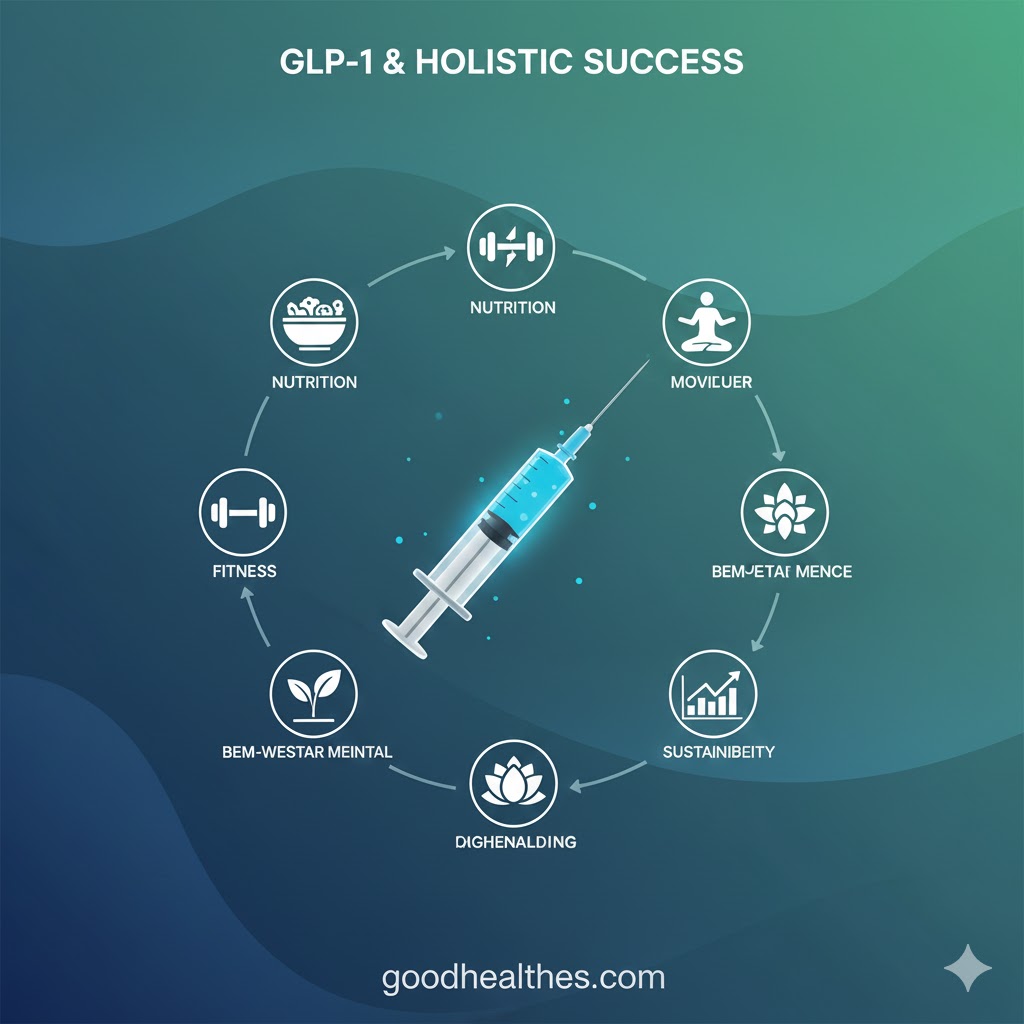
The Holistic Solution: Argue that for sustainable health and longevity, GLP-1s must be paired with:
Targeted Nutrition: High protein intake to prevent muscle loss.
Resistance Training (Fitness): Essential to build and maintain lean muscle mass.
Mental Health: Addressing the underlying emotional and behavioral relationship with food (linking back to the Mind-Body connection).
4. Long-Term Ethical and Wellness Questions
Safety and Sustainability: Discuss the necessity of taking these drugs long-term and the ethical questions surrounding lifelong drug dependency.
The Cost Factor: Mention the high cost in the US and how this affects access and contributes to health inequality.
Future Focus: Conclude by shifting the focus back to sustainable wellness—emphasizing that regardless of medical advances, foundations like quality sleep, stress management, and functional movement remain paramount for true "good health."
The Science of Semaglutide: How GLP-1s Hijack Hunger Hormones
For years, weight management was simplified to "calories in, calories out." Today, a new generation of medications is proving that hormones play a far more complex and dominant role. Drugs based on the Glucagon-Like Peptide-1 (GLP-1) hormone have redefined what's possible in obesity treatment by effectively modulating the body's internal hunger signals.
The Origin: A Natural Gut Hormone
GLP-1 is a natural incretin hormone produced in your gut (specifically, in the L-cells of your small intestine) in response to eating food. Its primary job is to tell your body, "We've eaten, now let's process this."
Semaglutide, the active ingredient in Ozempic and Wegovy, is a synthetic compound designed to mimic and vastly prolong the effect of this natural GLP-1.
1. The Triple-Action Mechanism of Semaglutide
Semaglutide works by orchestrating three powerful actions across the body, fundamentally changing how you relate to food:
Action 1: Slowing Gastric Emptying (The Satiety Effect): Semaglutide slows down the rate at which food leaves the stomach. This mechanical delay causes a profound feeling of fullness that lasts longer, meaning you feel satisfied much earlier in the meal and for hours afterward. This is a primary driver for the reduced caloric intake.
Action 2: Directly Regulating Appetite (The Brain Connection): The drug crosses the blood-brain barrier and acts directly on the hypothalamus, the brain’s center for regulating appetite and energy balance. By signaling satiety pathways, it dramatically reduces food cravings and minimizes the compulsive "food noise" that often drives overeating.
Action 3: Glucose Management (The Original Purpose): Semaglutide remains a powerful tool for blood sugar control. It stimulates the pancreas to release insulin only when blood glucose levels are elevated. Crucially, it also inhibits the release of glucagon, the hormone that raises blood sugar, preventing dangerous spikes.
2. Why Semaglutide is a Game Changer
Traditional weight loss methods rely heavily on willpower to override hormonal signals. Semaglutide, by providing constant hormonal support, effectively resets the metabolic baseline of individuals struggling with obesity.
Clinical trials have shown that patients on Semaglutide, when combined with diet and exercise, achieve a significantly higher percentage of weight loss compared to lifestyle changes alone. This demonstrates that the drugs address the underlying physiological barriers to weight loss, moving the focus from moral failure to medical treatment.
3. The Critical Caveat: Medical Supervision
Despite the revolutionary results, it is essential to stress that these are potent medications, not over-the-counter supplements.
Risk Factors: They come with potential side effects, including gastrointestinal distress (nausea, diarrhea), and carry warnings regarding rare but serious They come with potential side effects, including gastrointestinal distress (nausea, diarrhea), and carry warnings regarding rare but serious conditions like pancreatitis and thyroid tumors.
Sustainability: The current understanding is that the benefits persist only while the medication is taken. This requires ongoing medical management and monitoring.
Section Conclusion: Semaglutide represents a powerful pharmacological tool in the fight against obesity. However, its effectiveness in achieving long-term, holistic health depends entirely on integrating it with optimized nutrition and physical activity, rather than relying on the needle alone.
The Gap in the Program: Why Holistic Health is Still Essential
The speed and efficacy of GLP-1 medications are undeniable, but they have also exposed a critical gap in the purely pharmacological approach to weight loss: the lack of focus on body composition and behavioral sustainability. While the scale may drop quickly, long-term health is determined by what the body loses and how the mind adapts.
This is where the holistic health philosophy, the core of goodhealthes.com, becomes non-negotiable.
1. The Muscle Mass Crisis
One of the most alarming findings in patients achieving rapid weight loss via GLP-1s is the significant concurrent loss of Lean Body Mass (LBM), which includes muscle.
The Problem: The body enters a severe caloric deficit. Without conscious effort, it will use muscle tissue, which is metabolically expensive to maintain, as an energy source. The loss of muscle mass leads to a decrease in the Basal Metabolic Rate (BMR), the number of calories burned at rest.
The Rebound Risk: A lower BMR makes it exponentially easier to regain weight once medication is stopped, leading to the dreaded "rebound effect."
The Holistic Countermeasure: Resistance Training: This is the absolute priority. The only effective signal the body receives to preserve or build muscle is resistance training. Any patient on Semaglutide should integrate weightlifting, bodyweight exercises, or resistance bands to ensure the weight lost is predominantly fat mass.
2. The Nutritional Non-Negotiables
While GLP-1s suppress appetite, they do not inherently guide patients toward nutrient density, nor do they prevent the intake of empty calories. The reduced appetite forces individuals to make every calorie count.
High-Protein Imperative: Protein is the key nutrient for satiety and muscle preservation. Patients need to aggressively prioritize high-quality protein (lean meats, legumes, dairy) to hit targets that support LBM.
Micronutrient Density: With reduced food volume, there is a risk of vitamin and mineral deficiencies. Focused consumption of nutrient-dense foods (colorful vegetables, fruits, whole grains) and careful supplementation, guided by a professional, is vital.
3. Addressing the Behavioral Roots of Eating
Weight gain is often intertwined with emotional regulation, stress, comfort, and deep-seated habits—elements the drug cannot treat.
Mindfulness and Awareness: The drug may remove the intense "food noise," but it doesn't solve the habit of reaching for food when stressed or bored. This requires mindfulness techniques and potential therapy (CBT) to teach the patient how to decouple emotions from eating behavior.
The Mind-Body Connection: If the underlying stress (high cortisol from the HPA axis) that drove emotional eating is not managed, the patient remains vulnerable to relapsing into old habits or developing new coping mechanisms once the drug is discontinued.
Section Conclusion: GLP-1s are a powerful chemical break from the cycle of overeating, but they cannot build the structure of lasting health. Sustainable success demands a proactive, holistic partnership that prioritizes muscle mass through fitness, fuels the body with strategic nutrition, and heals the emotional relationship with food.
Long-Term Ethical and Wellness Questions
The introduction of GLP-1 agonists marks a pivotal moment in medical history. However, as these drugs become part of the social fabric, they raise crucial questions about long-term sustainability, societal equity, and the ultimate definition of health. For true wellness—the mission of goodhealthes.com—we must look beyond the immediate results.
1. The Question of Lifelong Dependency
Current medical consensus suggests that the weight loss benefits of Semaglutide largely disappear when the medication is stopped. This means patients may face a choice: either continue injections for life or confront the likelihood of significant weight regain.
Financial Burden: The high cost of these medications in the US creates a significant financial burden, immediately limiting access for many and raising concerns about long-term financial feasibility.
Societal Shift: What does it mean for preventative health when the solution to lifestyle-related conditions (like type 2 diabetes and obesity) becomes a lifelong drug? This shifts focus away from public health initiatives aimed at improving food environments and promoting activity.
2. Redefining Success: From Scale to Well-being
For too long, success in weight loss has been measured solely by the number on the scale. The GLP-1 revolution forces us to adopt a more nuanced view of health.
Metabolic Markers over Pounds: True health success is better measured by improvements in metabolic markers—lower blood pressure, improved blood sugar control, better cholesterol profiles—rather than just aesthetics.
Quality of Life: The goal is not merely to lose weight, but to gain the quality of life to engage in activities, pursue passions, and improve mental resilience.
3. The Enduring Power of Foundational Wellness
The greatest takeaway from the GLP-1 era is not the drug itself, but the reminder that foundational, holistic wellness remains the bedrock of true health, with or without medication.
The Non-Negotiables: Regardless of pharmacological advancement, the body thrives on the following pillars:
Stress Management: Techniques like mindfulness and breathwork to regulate the HPA axis (as discussed in Chapter 2).
Optimized Sleep: The body’s primary mechanism for repair and hormonal reset.
Functional Movement: Daily activity that goes beyond structured exercise, focusing on mobility and vitality.
Article Conclusion: The GLP-1 revolution has given us a powerful medical tool, but it has not replaced the need for fundamental self-care. Use the science to understand your body, but empower yourself with the holistic strategies—nutrition, fitness, and mindfulness—that ensure your weight loss journey is not just successful, but truly sustainable and profoundly healthy.